Your Car Policy Won't Cover This
Trailer insurance Auckland
Is your trailer covered right now?
Most Kiwis assume their car policy covers the trailer too. It usually does not. You might get limited cover while the trailer is attached, but once you unhitch it, protection often stops. Sub-limits for trailers tend to be low, and some trailer types are excluded altogether. We help you figure out what your current policy does and does not protect, then find the right solution for your trailer. That could be a dedicated policy, an extension, or a different approach depending on what is out there.
The Basics
What is trailer insurance?
Trailer insurance is cover that protects your trailer against theft, fire, accidental damage, and natural events. A dedicated trailer policy works separately from your car insurance and covers the trailer whether it is hitched or sitting in your driveway. Options vary depending on the trailer type, the insurer, and what policies you already hold.
Hundreds of thousands of boat trailers, horse floats, box trailers, and camper trailers are on New Zealand roads. Most owners assume their car policy extends to the trailer automatically, but it rarely does. In practice, car policies generally only cover the trailer while it is physically attached to the towing vehicle via the tow bar and wiring harness. Even then, sub-limits can be low. Boat trailers and horse floats may be explicitly excluded from standard motor vehicle policies. So if the trailer gets stolen from your Auckland driveway, or damaged in a Tauranga storm while parked, or reversed into at a Canterbury boat ramp, your car policy may not pay out at all.
Every trailer used on the road must be registered with Waka Kotahi (NZTA) and display a plate. Light trailers up to 3,500kg need a current Warrant of Fitness (WoF), and heavier trailers need a Certificate of Fitness (CoF) instead. Insurers will want valid registration and a current inspection as a condition of cover, and your tow vehicle needs sufficient towing capacity for the trailer's gross weight. Kapi Insurance spots the gap between what your car policy covers and what your trailer is worth, then finds you the best available option.
Trailer Types
Which trailer types can be insured?
Trailers come in all shapes and values. What you need for cover depends on the trailer type, how you use it, and where you keep it. We search across the market for all common trailer types, from Auckland boat trailers to Canterbury farming rigs. Not every insurer covers every trailer, so availability varies.
Boat trailers
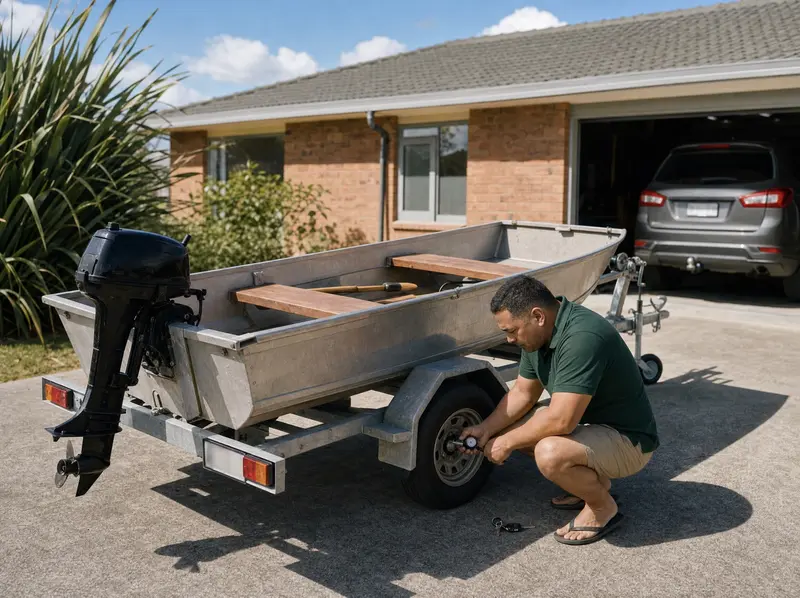
Boat trailers are one of the most common trailer types on New Zealand roads. Single axle or tandem, galvanised steel or painted mild steel, they all spend long stretches parked at marinas, boat ramps, and driveways. In Auckland, trailers sit unattended at boat ramps for hours. Down in Tauranga, coastal storage puts them in constant salt air that eats through axles, lights, and wiring. Submersible lights, roller cradles, and skid bunks take a hammering from saltwater too. Standard motor vehicle policies offer very limited cover for boat trailers, and some exclude them outright.
Cover may include
- Theft from driveways, marinas, and storage
- Accidental damage during towing
- Storm and weather damage while parked
- Fire damage
Good to know
Boat trailer insurance covers the trailer itself. The boat is covered separately under a marine or boat insurance policy. We can arrange both.
Horse floats and livestock trailers
Horse floats are expensive to buy and expensive to replace. A quality two-horse float is a significant investment, and larger floats with living quarters cost even more. Breast bars, rubber matting, and ramps all push the replacement value higher. Standard car insurance does not cover floats properly. Specialist cover exists, though which insurers offer it depends on the float, so it is worth checking.
Cover may include
- Agreed or market value for total loss
- Specialised fittings and living quarters
- Transit and storage cover
- Theft and vandalism
Good to know
Livestock trailer insurance covers the trailer and its fittings. The animals themselves require separate livestock transit insurance if you need them covered during transport.
Utility and camper trailers
Box trailers, caged trailers, flatdecks, enclosed trailers, pop-top campers, and off-road campers may all have cover options, though availability differs between insurers. Camper trailers keep getting more popular for trips to DOC campsites and freedom camping spots. With built-in kitchens, beds, and awnings, they can be worth a lot of money.
Cover may include
- Theft, fire, and accidental damage
- Built-in appliances and awnings (camper trailers)
- Storm and weather damage
- Transit damage while towing
Good to know
Tools and equipment left on a utility trailer are not always covered under trailer insurance. Check your contents insurance or ask us about adding tool cover.
Quote online in minutes. No-obligation advice from a broker.
Side by Side
What does trailer insurance cover?
Dedicated trailer cover, whether a standalone policy or the trailer listed on its own motor policy, covers sudden and accidental loss to the trailer, and it applies whether the trailer is hitched, parked or in storage. This table compares that with relying on your car policy alone. Exact inclusions still differ between insurers and trailer types, which is why it pays to have a broker go through the wording.
| Cover feature | Car policy extension | Dedicated trailer cover |
|---|---|---|
| Theft (while parked or stored) | Limited / while attached only | Yes |
| Fire damage | Limited | Yes |
| Accidental damage | While attached only | Yes |
| Storm and weather damage | No | Yes |
| Transit damage while towing | Limited | Yes |
| Damage while stored or parked | No | Yes |
| Third-party liability | Via car policy | Yes, up to $20 million for property damage |
| Contents on trailer | No | No, the trailer only |
| Tyre and wheel damage | No | Yes, in an accident (punctures alone excluded) |
| Axle and suspension damage | No | Yes, if sudden and accidental |
| Lights and wiring damage | No | Yes, if sudden and accidental |
| Jockey wheel and coupling | No | Yes, if sudden and accidental |
Car policy extensions typically carry a low sub-limit for trailer cover, often around $1,000, and usually exclude boat trailers, horse floats and camper trailers. Dedicated trailer cover removes those limitations: it applies while the trailer is towed, parked or stored, with payouts based on market value up to your sum insured (agreed value is not always available for trailers). Wear and tear is excluded, punctures on their own are excluded, and the load you carry is not covered. Insurers usually expect an unattended boat trailer to be secured with a coupling lock or wheel clamp, and a caravan left unoccupied for a month or more may need to sit in supervised storage to stay covered. Terms vary by insurer and trailer type, so talk to a broker about your specific situation.
Where the Gap Sits
Dedicated trailer cover vs car policy extension
Some comprehensive car policies include a towing extension that gives limited protection for a trailer while it is attached to the insured vehicle. That is not the same as dedicated trailer cover. Knowing the difference helps you see where the gaps sit.
Car policy towing extension
A towing extension is an add-on or built-in benefit on your comprehensive car insurance. Read the product disclosure statement (PDS) carefully. Cover only applies while the trailer is physically connected to the towing vehicle, and the policy wording sets strict conditions around what counts.
Limitations
- - Cover usually stops when the trailer is unhitched
- - Low trailer sub-limits that may not cover meaningful losses
- - No cover for theft from storage or driveways
- - Storm and weather damage while parked is excluded
- - Not suitable for high-value trailers like horse floats
Dedicated trailer cover
A dedicated policy written for the trailer itself. Cover applies whether the trailer is being towed, parked at home, locked up at a storage yard, or sitting at the marina. Availability still depends on the insurer and your trailer type.
Advantages
- Covers the trailer when detached from the tow vehicle
- Sum insured is set to the trailer's actual value
- Covers theft from storage, driveways, and marinas
- Covers storm and weather damage
- A broker can search across insurers to find what suits your trailer
A car policy towing extension might be enough for a low-value box trailer that stays hitched. But for boat trailers, horse floats, camper trailers, or anything stored away from the towing vehicle, the sub-limit on your car policy is almost certainly too low. Open your PDS and look at the trailer section. If the sub-limit is around $1,000, as it commonly is, it will not cover a meaningful loss. What you should do next depends on your trailer type and what insurers are offering. Some trailers have more options in the market than others. We can go through your existing policy wording, find where the gaps are, and source the best available cover for your situation.
Pricing
Factors that affect your trailer insurance premium
Premiums are based on a range of risk factors specific to the trailer. When you know what drives the price, you can make smarter choices about cover level and storage.
- Trailer type and value
- A basic box trailer costs less to insure than a high-value horse float. Type, make, and replacement value all feed into the premium. Custom-built or specialised trailers tend to cost more because repair and replacement bills run higher.
- Age and condition
- Newer trailers in good nick are easy to insure. Older ones may have structural wear, rust, or outdated components that push the risk up. Insurers look at the trailer's age alongside its maintenance history and how it looks today.
- Storage location
- Where you park the trailer matters. A locked garage or secure compound is lower risk than a residential driveway or open marina. Salt air near the coast eats into axles, lights, and wiring, which makes claims more frequent. Secure yards with restricted access attract lower premiums. Up in the upper North Island, cyclone-prone regions can mean higher weather-related risk too.
- Usage frequency
- A trailer on the road every weekend has more exposure than one used a few times a year. Towing regularly raises the risk of transit incidents. Insurers factor in both how often and how far the trailer typically travels.
- Security measures
- Wheel clamps, coupling locks, and GPS trackers all reduce theft risk. Some insurers will discount the premium if you fit a hitch lock and GPS tracker. Anyone can back up to an unsecured trailer and drive off with it in under a minute, so security gear makes a genuine difference to what you pay and how well you sleep.
- Claims history
- A clean claims history brings a lower premium. Past trailer claims, or a pattern of claims across other policies, tells the insurer you are higher risk. Keep your record clean over a few years and you will see the price come down.
Other insurance you might need
Trailers rarely exist in isolation. Own a boat trailer? You almost certainly need boat insurance as well. Tow with your car? Your car insurance needs to be set up properly for towing. We look at everything together so there are no gaps across your policies.
Related insurance products
A lot of our clients bundle trailer insurance with other policies. We go through everything in one conversation so nothing gets missed.
FAQ
Common trailer insurance questions
These are the questions we hear most from trailer owners, whether Auckland boat ramp regulars or Canterbury farmers. If yours is not listed, request a callback and we will get back to you.
Get a Free QuoteDoes my car insurance cover my trailer, and what is the sub-limit?
Most comprehensive car policies include an automatic trailer benefit, but it is small and conditional. The sub-limit is commonly around $1,000, paid at market value, and it only applies while the trailer is attached to your car. Caravans, boat trailers, horse floats and camper trailers are usually excluded from the benefit entirely, and the contents of the trailer are never covered. Unhitch the trailer in your driveway or at the marina and the car policy benefit stops. Check your own wording's trailer section for the exact figure and exclusions. For any trailer worth more than the sub-limit, or any excluded trailer type, dedicated trailer cover is the fix.
Are the contents inside my trailer covered?
No. Trailer insurance covers the trailer itself, not the load it carries, and NZ trailer wordings exclude contents outright rather than offering them as an optional extra. Car policy trailer benefits exclude trailer contents too. The exceptions sit with towed accommodation: caravan policies often include an automatic personal effects benefit, commonly around $2,500 to $3,000, and camper trailer policies can include built-in appliances and awnings within the sum insured. For tools, sports gear, or anything else riding in an ordinary trailer, cover has to come from somewhere else, usually your contents policy if it extends to items away from home. Check that extension before assuming the gear on the back is protected.
Do I need separate insurance for a boat trailer?
It depends on your existing policies. Your boat insurance typically covers the boat itself, and your car insurance covers the tow vehicle. The galvanised steel trailer sitting between them often falls through the cracks. Standard motor vehicle policies usually have limited cover for trailers, and some trailer types like boat trailers may be explicitly excluded or subject to low sub-limits. Given how often boat trailers sit unattached at ramps and marinas, it is worth checking what your current policies cover. A broker can review your situation and find options that address the gaps. Insurers usually expect an unattended boat trailer to be secured with a coupling lock or wheel clamp, and without one a higher theft excess can apply.
What about horse floats? Do they need their own policy?
Horse floats and livestock trailers can be high-value assets. Standard car insurance generally does not cover them adequately. Depending on the insurer, you can arrange cover for the float that includes theft, fire, accidental damage, storm damage, and transit incidents. Fittings like living quarters, breast bars, rubber matting, or a rear ramp can be included in the sum insured. Cover options and availability vary by insurer and trailer type, so it is worth talking to a broker about what is available for your specific float.
Is my trailer covered while parked or stored?
It depends on your policy. Most car policies only extend limited cover to the trailer while it is physically attached to the tow vehicle. Once you unhitch it at home, at a storage compound, or at the marina, car policy cover typically stops. A standalone trailer policy is different: cover applies while the trailer is towed, parked, garaged or stored. Storing the trailer in a secure yard or using a wheel clamp and coupling lock while it is on your residential driveway can help reduce your risk and may lower your excess.
What is the difference between agreed and market value for trailers?
Agreed value locks in a fixed sum insured when you take out the policy. If the trailer is a total loss, you receive that amount less your excess. Market value pays what the trailer is worth at the time of the claim, factoring in age and condition. Not every insurer offers agreed value for trailers. Many pay whichever is less of the market value and the sum insured on your schedule, so keep your sum insured realistic. You can also choose a higher voluntary excess to reduce the annual cost.
Does Waka Kotahi registration affect trailer insurance?
Every trailer used on NZ roads must be registered with Waka Kotahi (NZTA) and display a plate. Light trailers up to 3,500kg need a current Warrant of Fitness (WoF); heavier trailers need a Certificate of Fitness (CoF) instead. Insurers typically require valid registration and a current WoF or CoF as a condition of cover. If the trailer is unregistered or the inspection has lapsed, a claim could be declined. Keeping registration current protects both your legal compliance and your insurance.
What if my trailer is damaged by someone else?
If another driver damages your trailer, you can pursue them for the repair cost. If they are uninsured or refuse to pay, recovering that money becomes your problem. If you have dedicated cover for your trailer, the insurer may handle the repair and recover the cost from the at-fault party. You would pay your excess and get the trailer fixed without chasing anyone. The availability of this depends on your specific cover.
How do I make a claim on trailer insurance?
You contact the insurer directly to lodge your claim. Provide details of the incident, photos of the damage, and any relevant police report numbers for theft or vandalism. The insurer assesses the claim and arranges repair or payout. Kapi Insurance can help you understand what documentation is needed before you call, but the claims process itself is handled by the insurer.
Can I insure a camper trailer or caravan?
Yes. Pop-top campers, off-road campers, and caravans can usually be insured, depending on the insurer and vehicle type. Cover typically includes theft, fire, accidental damage, storm damage, and transit damage while towing. Built-in appliances, awnings, and annexes can be included in the sum insured. Watch the unattended conditions: cover for a caravan left unoccupied for more than about 30 days often depends on it being in a supervised park or storage. A GPS tracker fitted to the camper can reduce your premium and improve recovery odds if it is stolen.
Why use a broker for trailer insurance?
Trailer cover is a niche area and not every insurer offers it, particularly for certain trailer types like boat trailers and horse floats. Kapi Insurance knows which insurers have options for your situation, what the policy wording says, and how to structure the right level of cover. We read the product disclosure statement so you do not have to. The insurer pays us a commission, and your premium is the same as going direct.
Find out if your trailer is covered
Most trailer owners find out they are underinsured after something goes wrong. Tell us what you have, how you use it, and where you keep it. We will check your existing cover, spot the gaps, and find the best available options for your situation. Takes a few minutes. No obligation.
No obligation.