EVs & Hybrids
Electric vehicle insurance Auckland
A small dent can total your car. Your policy should account for that.
A fender bender that would be a quick panel repair on a petrol car can write off an EV. The battery sits under the floor. If it takes a hit, insurers often total the vehicle rather than replace it. We find cover that accounts for that risk, review the policy wording, and make sure battery and charging equipment are sorted before you need them.
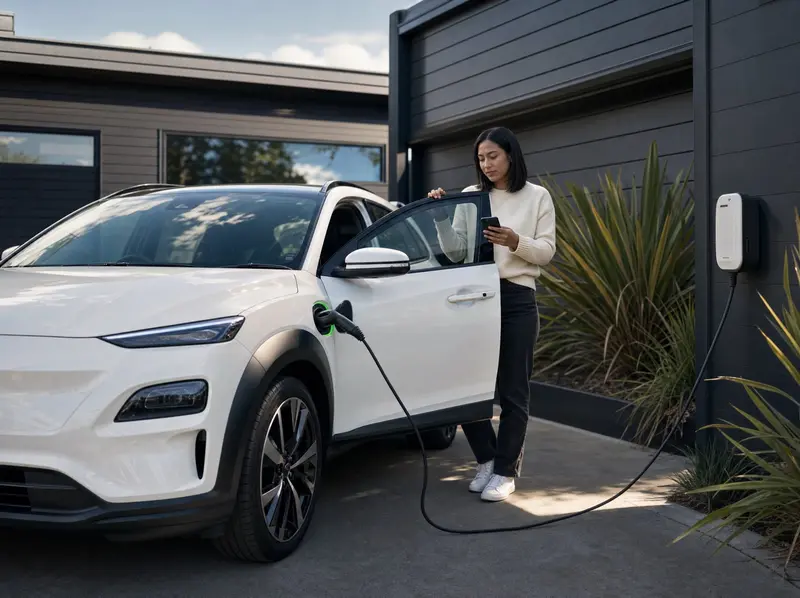
What is electric vehicle insurance?
Electric vehicle insurance is standard car insurance applied to an EV, sold in the same three tiers: comprehensive, Third Party Fire and Theft, and Third Party only. There is no separate "EV product". The stakes are different, though. A battery pack can cost more to replace than the rest of the car, charging cables and wall boxes need their own cover, and the repair network is thin enough that panel beaters sit on Immigration New Zealand's skill shortage list, with EV-qualified ones a smaller subset still.
These factors change what level of cover makes sense, what excess you should accept, and whether agreed value or market value is the right call. Around 100,000 fully electric vehicles are on New Zealand roads as at mid-2026, and new EV registrations in March 2026 were up 278% on March 2025. That is a lot of vehicles that need cover built around battery risk, not just a standard car policy with "electric" tacked on.
New Zealand insurers generally cover electric vehicles under their standard comprehensive motor policies, and several have added explicit provisions for battery damage and charging equipment as EV numbers have grown. Model-specific products exist for some vehicles too. The terms differ from one insurer to the next, so the wording is worth reading rather than assuming EV-specific cover is built in.

How the battery is assessed after damage lives in the policy wording, not the brochure.
Cover Levels
Types of electric vehicle insurance available
Same three tiers as any motor vehicle policy. The right level depends on what the vehicle is worth, how you use it, and how much you could absorb out of pocket if something went wrong.
Third Party only
Covers your legal liability for damage you cause to another person's vehicle or property. Your own EV is not covered, and neither is the battery, theft or charging equipment. Given what even an entry-level EV costs, this tier leaves a gap most owners cannot afford.
Typically covers
- Damage to other people's vehicles
- Damage to third-party property
- Legal liability cover
Best suited for
Older, lower-value used imports like early Nissan Leafs where the replacement cost is genuinely low. Hard to justify for anything else.
Third Party, Fire and Theft
Everything in Third Party only, plus cover if your EV is stolen or catches fire. Some policies extend this tier to charging cables, adaptors and wall boxes for fire or theft, though not all of them do. Accidental damage is still not covered.
Typically covers
- All third-party liability cover
- Theft of your electric vehicle
- Fire damage (including battery fire)
- Charging cables/wall box (fire and theft)
Best suited for
A middle ground for older used EVs where comprehensive is hard to justify against the vehicle's current value. The fire element is more relevant for EVs than petrol cars because of lithium battery risks. Still leaves you exposed to accidental damage and the battery write-off risk.
Comprehensive EV insurance
The widest tier covers accidental damage, theft, fire, vandalism and storm damage, and it is where battery cover and charging equipment protection apply. On many comprehensive policies, charging cables, adaptors and wall boxes are covered for accidental loss or damage, and the battery is covered for accident, fire and theft. The detail varies between insurers, so check the wording. Because even a moderate impact can write off an EV entirely, comprehensive is what we recommend for any electric vehicle you could not replace out of your own pocket.
Typically covers
- All Third Party and fire/theft cover
- Accidental damage (collision, impact)
- Battery damage from covered events
- Charging cables, adaptors, wall boxes
- Weather and storm damage
- Vandalism
- Windscreen/glass damage
Best suited for
Most electric vehicles. New EVs, financed EVs (lenders typically require it), Tesla, BYD, MG, Polestar, and anything where battery replacement alone could exceed what the vehicle is worth. Almost every EV owner we work with ends up on comprehensive.
Quote online in minutes. No-obligation advice from a broker.
Side by Side
What does electric vehicle insurance cover?
What is covered at each level, with EV-specific items like battery damage and charging equipment broken out separately. Exact terms vary between insurers and policies.
| Cover feature | Third Party only | Fire and theft | Comprehensive |
|---|---|---|---|
| Third-party property damage | Yes | Yes | Yes |
| Legal liability | Yes | Yes | Yes |
| Theft of your EV | No | Yes | Yes |
| Fire damage (incl. battery fire) | No | Yes | Yes |
| Accidental damage / collision | No | No | Yes |
| Battery damage (accident/fire/theft) | No | Fire/theft only | Yes |
| Battery degradation / wear and tear | No | No | No |
| Charging cables and adaptors | No | Fire/theft only | Yes |
| Wall box / home charger (owned) | No | Fire/theft only | Yes |
| Weather / storm damage | No | No | Yes |
| Vandalism | No | No | Yes |
| Windscreen / glass | No | No | Yes |
The Payout Decision
Agreed value vs market value for electric vehicles
The agreed value or market value choice matters more for EVs than for petrol cars. Battery replacement costs can tip a claim from "repair" to "write-off." If the insurer assesses market value at less than the repair bill, the vehicle is totalled and you receive whatever the market says it is worth at that moment. Agreed value removes that uncertainty.
Agreed value
You and the insurer agree on a fixed sum when the policy starts. If the vehicle is written off, or stolen and never recovered, you receive that amount less your excess, with no argument about depreciation and no scramble over what the market says. For EVs this matters because battery condition directly affects vehicle value. A battery at 80% health changes the equation. Agreed value locks that down upfront.
Advantages
- Certainty on payout amount
- Protects against rapid EV depreciation
- No disputes at claim time over battery condition
Considerations
- - Slightly higher premium
- - Agreed amount needs reviewing at each renewal
Market value
The insurer pays what the vehicle is worth on the open market at claim time, based on age, condition, kilometres, and comparable sales. EVs depreciate differently to petrol cars. Battery health is a major factor in resale value, and some models lose value faster than others. A three-year-old EV with 80% battery health is worth significantly less than the same model with 95%.
Advantages
- Lower premium
- No need to set a value upfront
- Works for older, lower-value used EVs
Considerations
- - Payout drops as the vehicle and battery age
- - Battery health directly affects the assessed value
- - You may receive less than what you owe on finance
For newer EVs and anything still on finance, agreed value is what we recommend. EV depreciation can be steep. The gap between what you paid and what the market says it is worth opens up faster than most owners expect. At each renewal, we review the agreed amount against current market data to keep it realistic.
Pricing
Factors that affect your EV insurance premium
EV premiums run higher than equivalent petrol vehicles. Knowing what drives the price gives you something to work with when the quote comes back steeper than expected.
- Vehicle purchase price
- EVs still cost more to buy than equivalent petrol cars. Higher vehicle value means higher insured amount, which flows directly into the premium. More competition from BYD, MG, and Kia is pushing prices down, but the gap has not closed yet.
- Battery replacement cost
- Battery replacement is the most expensive single component on an EV. On some models, it can exceed the resale value of the vehicle. When the battery is structurally integrated into the floor, even moderate undercarriage damage can result in a total loss. Insurers price that risk directly into the premium.
- Specialist repair requirements
- Fewer workshops in New Zealand can repair EVs. Panel beaters are on Immigration New Zealand's shortage lists. EV-qualified technicians are a smaller subset again. Parts often ship from overseas. All of that adds up to higher labour rates and longer claim resolution. Auckland has the most repair options. Regional areas have far fewer.
- Driver age and experience
- The same rules apply as on any motor vehicle policy. Drivers under 25 face higher premiums and an additional age excess on top. A strong no-claims bonus and full licence bring it down. Every named driver on the policy is assessed individually, so who else drives the vehicle matters too.
- Location and storage
- Auckland suburbs attract higher premiums due to theft rates. A vehicle kept in a locked garage overnight costs less to insure than one parked on the street. Security features like immobilisers and GPS tracking devices also factor in. Tesla owners benefit from the vehicle's built-in Sentry Mode and GPS, which some insurers recognise.
- Less claims data for EVs
- Insurers have decades of data on petrol vehicles. EV data is still thin. Less data means more uncertainty in risk models, and insurers price uncertainty into premiums. As the EV fleet grows and claim history accumulates, this gap should narrow.
Bundling
Other insurance you might need
Most EV owners also insure their home and contents. Your wall-mounted charger falls under home insurance, not your car policy. Bundling policies through a broker keeps everything in one place.
FAQ
Common electric vehicle insurance questions
These are the questions EV owners ask us most often. Tesla drivers in Auckland, Nissan Leaf owners in Christchurch, everyone considering their first electric vehicle. If yours is not here, request a callback and we will be in touch.
Get a Free QuoteDoes my EV battery get covered under car insurance?
Yes. Under a comprehensive policy, the battery is covered for accidental damage, fire, and theft. What is not covered is gradual degradation or failure from normal wear and tear, the same way a petrol engine wearing out over time is not covered. Some insurers assess the battery's age and condition when settling a claim, and a few wordings allow the insurer to ask for a contribution towards replacement cost on an older battery. The approach varies between insurers, so it is worth having a broker check the detail before you commit.
Why is EV insurance more expensive than petrol car insurance?
Several factors push premiums up. EVs have higher purchase prices on average. Battery replacement is expensive, and on some models it can exceed the value of the vehicle itself. Fewer qualified EV technicians in New Zealand means longer repair times and higher labour costs. Parts are often sourced from overseas, adding wait times and freight. Structural battery integration in some models means minor damage can push the repair cost past the economic threshold, resulting in a write-off. Insurers also have less claims data on EVs compared to petrol vehicles, which means less certainty in their pricing models.
Is my home charger covered under car insurance or home insurance?
A wall-mounted charger permanently wired in by an electrician is part of your home, so it falls under your home or contents insurance. The portable charging cable that came with the vehicle is treated as part of the vehicle for insurance purposes. Several New Zealand comprehensive motor wordings specifically cover charging cables, adaptors and wall boxes you own for accidental loss or damage, provided they are not insured elsewhere. Under third party fire and theft, this equipment is typically covered for fire or theft only. Cover and sub-limits vary between insurers, so the policy wording matters.
What happens if a minor accident damages the battery?
Battery damage from a minor accident is one of the biggest risks EV owners face. In some models, the battery is built into the vehicle's floor structure. A side impact or undercarriage hit that would be a quick panel repair on a petrol car can compromise the battery casing. If the battery is damaged or the insurer cannot confirm it is safe, the repair cost can exceed the vehicle's value. That turns a fender bender into a total loss. Agreed value cover matters more for EVs than for petrol cars because of this risk. It locks in a payout figure upfront rather than leaving it to a market value assessment after the fact.
Do I still need to pay road user charges on my EV?
Yes. The RUC exemption for light electric vehicles ended on 31 March 2024, and RUC applied from 1 April 2024. Light EVs pay $76 per 1,000 kilometres. Plug-in hybrids pay a reduced rate of $38 per 1,000 kilometres. There is also an administration fee on each licence purchase. This is a running cost to factor in alongside insurance, registration, and the ACC levy.
Can I insure a used imported EV?
Yes. Used imported EVs, including popular models like the Nissan Leaf and earlier Tesla Model 3 units from Japan, can be insured under standard motor vehicle policies. The same considerations apply as any imported vehicle: parts availability, compliance certification, and accurate valuation. Battery health is an extra factor. A pre-purchase battery health check gives you and the insurer a clear picture of remaining capacity, which directly affects the vehicle's value and the terms of cover.
Is there a Tesla-specific insurance product in New Zealand?
Model-specific products do exist in the New Zealand market alongside standard comprehensive cover, and they can bundle benefits such as charging cable and wall box cover, glass repair and a repair guarantee through approved repairers. Whether one beats a standard comprehensive policy depends on the car and how you use it, so it is worth comparing both.
What about fire risk from charging at home?
Lithium battery incidents during charging do happen, though they remain uncommon relative to the number of EVs on the road. If a fire starts in your vehicle while charging, the vehicle damage falls under your car insurance. Damage to your garage, house, or property falls under your home insurance. Using a qualified electrician for charger installation and following the manufacturer's charging guidelines reduces the risk. Avoid using extension leads or multi-boards for EV charging.
Is there separate EV battery insurance in New Zealand?
No. There is no standalone battery policy to buy. The battery is insured as part of the vehicle, so a comprehensive policy covers it for accidental damage, fire and theft, and no tier covers gradual degradation. If what worries you is the battery failing rather than being damaged, that is mechanical breakdown insurance territory, a separate product from car insurance, and some New Zealand breakdown providers now sell EV-specific packages.
Does charging an EV at home affect my home insurance?
A permanently wired wall charger becomes part of your home, so its replacement cost belongs in your home sum insured rather than your car policy, and it is worth adding when you next review that figure. Have the unit installed by a qualified electrician and follow the manufacturer's guidance. If a charging fire ever damaged the house, the home policy would respond, and the car policy would cover the vehicle.
Why do some insurers decline certain EV models?
Appetite varies by model, not by fuel type. An insurer quoting on an EV is pricing parts supply, certified repairer coverage and how the battery is assessed after damage, and a model with thin support in New Zealand can be declined by one insurer while another quotes it without fuss. A decline from one insurer is a reason to ask others, not a verdict on the car. Kapi Insurance keeps track of which insurers are taking which vehicles, which is one of the places a broker earns their keep.
Check if your EV cover has gaps
Tell us the make, model, and year. Where you keep it. How you use it. We come back with a straight answer on what cover you need and what the battery and charging equipment terms look like. No obligation.
No obligation.
Coverage examples on this page reference publicly available New Zealand policy wordings. Sub-limits, benefits, and conditions vary between insurers, so check your own policy.