Enthusiast vehicles
Classic car insurance in New Zealand
Nobody official decides when your car becomes a classic. Your insurer does.
The most searched question about classic car insurance is how old a car has to be before it counts. The honest answer is that New Zealand has no legal or official definition of a classic car, so the threshold moves depending on who you ask. One specialist insurer draws the line at 20 years. An enthusiast club draws it somewhere else again.
This page sets out the age lines that actually exist here, where each one comes from, and the things that matter more than the label: agreed value, how you use the car, and where it lives when you are not driving it. For everyday vehicles, standard motor cover is the place to start.
The Age Lines
How old does a car have to be to become a classic in New Zealand?
There is no official age. New Zealand has no legal definition of a classic car, so every insurer sets its own line. One specialist classic insurer publishes 20 years old or older, with some historic interest, as its threshold. Clubs and other insurers use different figures.
That is why the answer you get depends entirely on who you asked. Classic Cover Insurance states its eligibility as a vehicle that is 20 years old or older with some historic interest that makes it worth collecting, preserving or restoring, and adds that classics should be in relatively stock form, with mag wheels and minor modifications not being an issue. That is one published criterion, not a national standard. The insurer next door is free to set 25 or 30 years, or to look at the car and decide.
It is worth knowing where the age numbers people quote actually come from, because most of them were never about insurance at all.
| The age line | Where it comes from | What it actually decides |
|---|---|---|
| 20 years or older, with historic interest | Published eligibility of a New Zealand classic vehicle specialist | Whether that one insurer will write a classic policy on your car. Nothing else. |
| 30 years since construction | Vintage Car Club of New Zealand, Post 1980 category | Whether the car is club eligible. A club decision, made by enthusiasts, not by an insurer or a regulator. |
| Over 20 years old | NZTA exceptions to the vehicle standards | Cars over 20 years old do not have to meet frontal impact standards, and vehicles over 20 years old do not have to meet a vehicle exhaust emissions standard. |
| Over 40 years old | NZTA inspection frequency, changed 1 September 2025 | Light vintage and veteran vehicles over 40 years old moved from a warrant of fitness every six months to every twelve. |
Is a 30 year old car a classic?
It can be. Thirty years clears the published age threshold of at least one New Zealand classic specialist, and it is the point at which the Vintage Car Club counts a Post 1980 vehicle as eligible.
Age is the easy half of the test. The harder half is the phrase specialists keep using, which is historic interest. A 1995 hatchback that did 300,000 kilometres between Hamilton and Auckland and has a rusted sill is thirty years old and is not a classic to anyone. A 1995 model that was rare when it was new, has 60,000 kilometres on it and sits under a cover most of the year is a different conversation entirely.
So when you ask whether your car qualifies, the insurer is really asking three things at once. How old is it, how original is it, and is anybody restoring, preserving or collecting cars like it. Two out of three is usually enough to have the conversation.
This is also why the search results for classic and vintage car insurance are so contradictory. Every insurer answers from its own underwriting appetite, and none of them is wrong, because there is no shared rule to be wrong about.
The Club Vocabulary
What do enthusiast clubs count as vintage, veteran and classic?
Clubs use period categories rather than one cut-off. The Vintage Car Club of New Zealand publishes seven, running from vehicles built before the end of 1918 through to cars built in 1981 and later that have passed their thirtieth year.
These are the club's own eligibility categories, quoted from its published criteria. They carry no legal weight and no insurer is bound by them, but they are the closest thing New Zealand has to an agreed vocabulary, and they explain why a 1928 car is called vintage while a 1968 car is not.
- Veteran
- Constructed before 31 December 1918
- Vintage
- 1 January 1919 to 31 December 1931
- Post Vintage
- 1 January 1932 to 31 December 1945
- Post War
- 1 January 1946 to 31 December 1960
- Post 1960
- 1 January 1961 to 31 December 1980
- Post 1980
- Constructed on or after 1 January 1981, and eligible only from the day after the 30th anniversary of construction
- Historic Racing
- At least in their thirtieth year since original construction, plus factory built racing cars no longer in production
Membership is not a legal requirement for insuring an older car, and some specialists set their own eligibility without asking about it. Club-linked arrangements do exist here though. The Vintage Car Club runs its own insurance scheme with an insurer, and members are asked to have their membership number handy when they get a quote. If you already belong to a marque club or a branch, mention it, because it can also be the easiest way to evidence what your car is worth.
The Payout Question
Why does agreed value matter more on a classic car?
Because market value settlement assumes the car is losing value, and a well kept classic may not be. Agreed value fixes the payout figure with the insurer at the start of the policy, so a total loss is settled against a number you both wrote down rather than a number argued about afterwards.
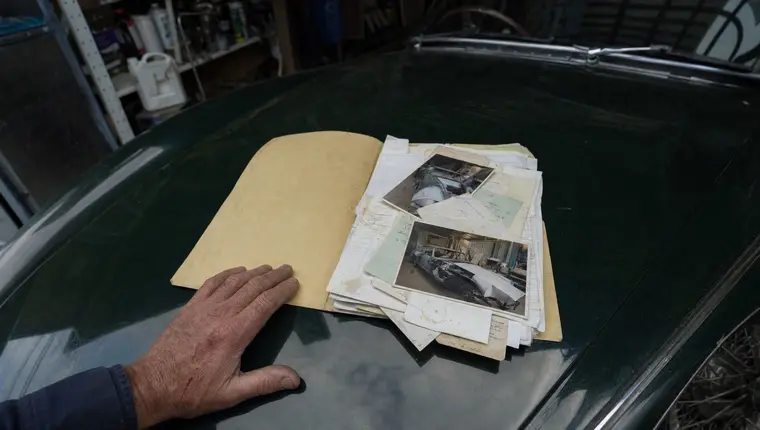
Receipts, photographs and a written valuation turn a nominated figure into an evidenced one.
A classic that has been looked after can be worth more at the end of the year than it was at the start. Market value settlement was never built for that.
On an ordinary car the gap between the two bases is annoying. On a classic it can be the whole value of the vehicle. A 2019 wagon written off in Christchurch will be settled somewhere near what the market says a 2019 wagon is worth, and everyone roughly agrees what that is. There is no equivalent reference point for a restored coupe with a documented history and a rebuilt engine, which is exactly why the figure needs settling in advance.
Two details are worth knowing before you assume agreed value solves everything. First, the agreed figure on a classic policy is normally set when the policy begins and looked at again at each renewal, and it can be moved as the vehicle changes in value. That review is your chance to lift the figure after a restoration, and it is the thing owners most often forget to do.
Second, read the settlement clause rather than the brochure. At least one New Zealand classic vehicle wording does not simply pay the agreed value on a total loss, it pays the lower of the agreed value and market value depending on which benefit applies. That is a real difference and it is written in the policy document, not on the quote screen.
Whatever figure you nominate, it has to be defensible. Photographs, a written valuation, receipts for restoration work, club documentation and the original purchase record all help. If the figure is optimistic and nothing supports it, that gets discovered at the worst possible moment.
Agreed value is not unique to classics. It shows up on ordinary policies too, and we cover how it sits alongside market value on our guide to comprehensive cover.
Read Before You Sign
What conditions come with a classic car policy?
Classic cover is priced on the assumption that the car is used and stored differently to a daily commuter. The conditions vary a lot between insurers, so the useful move is to ask each one what it assumes rather than guessing from the label.
-
How much you expect to drive it
Not every insurer caps your annual distance. One New Zealand specialist states plainly that it sets no limits on mileage and simply asks what you expect to travel. Others build cover around occasional use. Either way the number you give becomes part of what the insurer relied on, so give a realistic one rather than a hopeful one.
-
Where the car sits overnight
A locked garage in Dunedin, a shared basement park in central Wellington and a driveway in Auckland are three different risks. Insurers ask, and the answer feeds into both the price and the terms. If the storage arrangement changes, tell them, because the policy was written against the old answer.
-
How original the car is
Specialists look for a vehicle in relatively stock form. Mag wheels and small changes are ordinary on a car this age and are usually not a problem, but engine swaps, forced induction and suspension work move the car into different territory. Declare the lot in writing, including anything a previous owner did.
-
What happens while it is off the road
A car in pieces in a shed is still worth something and still faces fire and theft. New Zealand insurers do write storage and restoration cover for exactly this, and it typically excludes the vehicle being driven on the road under its own power. If your project will not turn a wheel for two years, this is the version of cover to ask about.
-
Club runs, shows and anything timed
A drive to a show and a timed run up a hill are not the same activity to an underwriter. If you plan to enter the car in anything organised or competitive, ask before the entry form goes in and get the answer in writing. Assuming it is included is how people find out it was not.
-
Who else drives it
Your job is to answer the insurer's questions accurately, and the Contracts of Insurance Act 2024 will formalise that as a duty to take reasonable care not to make a misrepresentation once it commences. If your son occasionally takes the car to a show, that is a question to answer accurately at the start, not a detail to raise after a claim.
Quick heads up: this is general information to help you get your head around classic and vintage cover, not advice about your exact car. What is actually covered comes down to your policy wording, so give it a read or flick us a message and we will talk it through.
Can you use a classic car as a daily driver?
It depends on the policy, not on the car. Some classic cover is written around occasional use, while one New Zealand specialist sets no mileage cap and simply asks what you expect to travel. The wrong move is daily-driving a car insured as a weekender.
The distance and use you declare become part of what the insurer relied on when it priced the policy. A classic that commutes into central Auckland five days a week faces a completely different theft, parking and low-speed accident exposure than one that comes out for club runs, and an insurer that priced the second is entitled to be surprised by the first. If your intentions change, tell the insurer before the pattern changes, not after something happens on the new commute.
The same conversation covers young drivers. A classic in the family is a lovely first car in theory, but specialist classic insurers commonly set minimum driver ages and have limited appetite for a main driver under 25. It is not a flat no across the market. It is a case-by-case underwriting question, so put the driver, the car and the honest usage in front of the insurer before anyone falls in love with the idea. Standard cover with the young driver correctly listed is sometimes the workable answer, even if the policy no longer says classic on it.
Price Shopping
Who is the cheapest classic car insurer in New Zealand?
There is no single cheapest insurer. The same car and the same owner can be priced competitively by one insurer and mid pack by another, because each one weights the vehicle, its value, where it is stored, how it is used and the driver's history differently.
On classics the spread is wider than on ordinary cars, because fewer insurers will write the risk at all and the ones that do have quite different appetites. An insurer that is happy with a 1972 saloon garaged in Christchurch may have no interest in a modified import, and the reverse is also true.
Which is why comparing on the same basis beats chasing a name. Same agreed value, same excess, same declared use, then look at what each wording actually does. We set out the method on our page about comparing car insurance properly.
Talk to us about what you drive
Classic vehicles sit outside standard motor underwriting, so what can be arranged depends on the car, its value and how you use it.
Tell us what you have. Year, model, what has been done to it, what you think it is worth, where it is kept and how often it comes out. We will tell you straight what looks arrangeable and what does not, rather than sending you a quote for a policy that was never designed for a car like yours.
When we arrange your cover, the insurer pays us a commission. If you ever need to claim, you deal with your insurer directly. Our job is getting the cover and the agreed value right at the start, and reviewing both at renewal so the figure keeps up with the car.
Worth doing before you call
Dig out the restoration receipts, any written valuation, and a few current photographs. It is the difference between nominating a figure and evidencing one.
FAQ
Common questions about classic car insurance
If your question is not here, request a callback and we will talk it through.
Get a Free Quote- How old does a car have to be to become a classic in New Zealand?
- There is no official age. New Zealand has no legal definition of a classic car, so each insurer sets its own line. One specialist classic insurer publishes 20 years old or older with some historic interest as its threshold. Other insurers and clubs use different figures.
- Is a 30 year old car a classic?
- It can be. Thirty years clears the age threshold published by at least one New Zealand classic specialist, and it matches the Vintage Car Club of New Zealand Post 1980 category, which admits a vehicle the day after the 30th anniversary of its construction. Historic interest still matters as much as the number.
- Do you need to belong to a car club to insure a classic?
- Not always. Some specialist insurers set their own eligibility without asking about club membership. Club-linked schemes do exist, and the Vintage Car Club of New Zealand runs one where members are asked for a membership number when they get a quote.
- What is agreed value on a classic car policy?
- Agreed value is a payout figure fixed with the insurer when the policy starts, rather than worked out after the loss. On classic policies it is normally reviewed at each renewal, so the figure can be moved as the vehicle changes in value.
- Can you drive a classic car every day?
- It depends on the policy. Some classic cover is written around occasional use, while one New Zealand specialist sets no mileage limit and instead asks what you expect to travel. Tell the insurer how you actually use the car and ask what the policy assumes.
- Who is the cheapest classic car insurer in New Zealand?
- There is no single cheapest insurer. The same car and the same owner can be priced competitively by one insurer and poorly by another, because each weights vehicle, value, storage, use and driver history differently. Comparing on the same cover basis matters more than chasing a name.
- Do classic car policies have kilometre limits?
- Some do and some do not. One New Zealand specialist sets no mileage cap and simply asks what you expect to travel, while other classic cover is written around occasional use. Either way the distance you declare becomes part of what the insurer relied on, so give a realistic figure.
- Can a driver under 25 get classic car insurance?
- Sometimes, and it is a case-by-case conversation rather than a quote form. Specialist classic insurers commonly set minimum driver ages and limited appetite for young main drivers, so the honest route is putting the driver, the car and how it will be used in front of the insurer before buying.
Got something worth keeping
Send us the details of your classic and we will work through what cover suits it, what agreed value it should carry, and what the wording actually says. No obligation.