Cover levels
Third party car insurance in New Zealand
The cover that pays for the other person's car, not yours.
Third party is the cover level that pays when your car damages someone else's vehicle or property. Your own car is left out, which is why it sits at the bottom of the price list and why most people treat it as the reluctant option. For an older car that is paid off, it is often the sensible one instead.
This page sets out what each level pays for, what a third party policy leaves out, and the point where dropping down from comprehensive stops costing you anything real. If you want the wider picture first, our guide to arranging car cover takes it from the top.
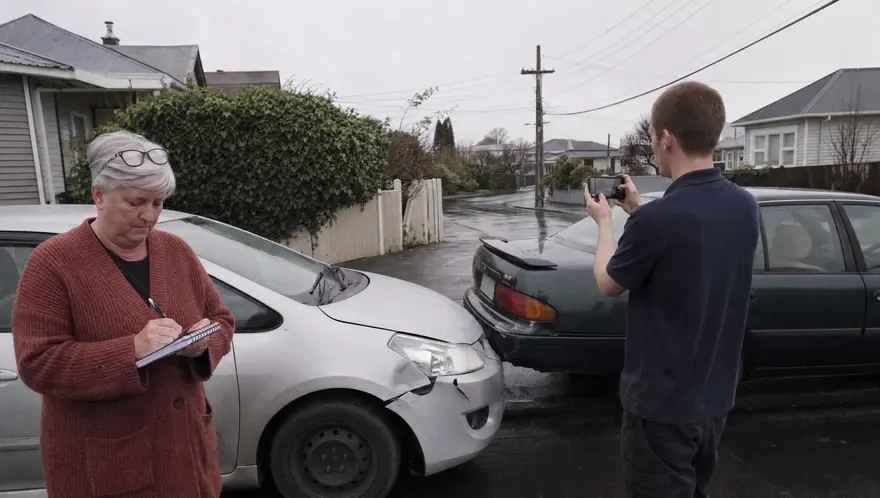
How does third party car insurance work in New Zealand?
Third party car insurance covers the damage your car does to other people's vehicles and property. The money goes to them, not to you. Your own vehicle is not covered for accident damage on this level, whoever was at fault.
The name is literal. You are the first party, the insurer is the second, and the third party is the person whose car you reversed into outside the Hamilton supermarket. The policy stands between you and their repair bill, which is the one number in a crash you have no control over. A late-model SUV with sensors behind the bumper can run past $15,000 for damage that looks minor from the outside.
That is why the liability limits are large. Most New Zealand motor policies cover legal liability for damage to other people's property up to $20 million, and that figure does not shrink when you drop to third party. It is the same ceiling on every cover level.
Injury works differently here than almost anywhere else. ACC covers personal injury on a no-fault basis and blocks most claims for compensatory damages, so a motor policy in this country is essentially a property damage policy. Some third party policies do add a limited amount towards a court-ordered reparation payment, though the limit varies by insurer and is worth checking on the wording.
None of it is compulsory. Car insurance is not a legal requirement in New Zealand, which sets us apart from most countries running a compulsory third party scheme. Nothing stops the driver who hits you from carrying no cover at all, and nothing stops you being personally liable for someone else's repair bill either.
Side by Side
What is covered under 3rd party insurance?
Damage your car causes to other people. Their vehicle, and their property such as a fence, a gate or a shopfront. Everything that happens to your own car sits outside the policy on the bottom level.
Reading the three levels side by side is the fastest way to see where the money actually goes. Wordings differ between insurers, so treat this as the shape of the market rather than a quote of any one policy.
| What happened | Third party | Fire and theft | Comprehensive |
|---|---|---|---|
| Damage your car does to someone else's vehicle | Covered | Covered | Covered |
| Damage your car does to someone else's property | Covered | Covered | Covered |
| Your car is stolen | No | Covered | Covered |
| Your car is damaged or destroyed by fire | No | Covered | Covered |
| Your car is damaged in a crash you caused | No | No | Covered |
| Your car is damaged by storm, flood or hail | No | No | Usually covered |
| Your car is vandalised | No | No | Usually covered |
| Your windscreen is cracked | No | No | Usually covered, often with its own excess |
| Towing or a rental car after a claim | No | No | Sometimes included, sometimes an add-on |
One thing the table cannot show: if someone else hits your car and their insurer accepts fault, their policy pays for your repairs regardless of what cover you hold. The rows where third party leaves you exposed are the ones where nobody else's insurer is standing behind the damage, and the next section works through exactly those situations.
The Other Driver
What if the driver who hits you is uninsured, or drives off?
Most third party policies include a limited uninsured driver benefit, set between $4,000 and $5,000 on the wordings we checked in August 2026. The benefit only applies when the driver can be identified and was at fault, which is why a hit-and-run is the gap it cannot fill.
- An insured driver hits your parked car
- Their insurer pays once fault is accepted, whatever cover you hold. Repairs if the car is economic to fix, its market value if it is not. Your job at the scene is evidence: the driver's name, registration, insurer if they know it, and photographs of both cars.
- An uninsured driver hits you
- The uninsured driver benefit in your own third party policy responds, up to its cap. Every wording we read requires the driver's name and contact details plus the other vehicle's registration, and the driver either confirming their involvement or fault being established. Some insurers pay without an excess, others deduct one, so check yours.
- A hit-and-run, driver unknown
- No cover on third party. The benefit above depends on identifying the driver, so an empty car park and a dented door is a bill you carry yourself. Report it to the police anyway, because CCTV or a witness note under the wiper turns an unidentified driver into an identified one.
- The same events on comprehensive
- Comprehensive pays for your car in all three situations. The excess is normally waived only where the other driver is identified and at fault, so a hit-and-run claim usually still costs you the excess. The difference is that the repair itself is covered.
The dollar caps are worth taking seriously. A $4,000 to $5,000 benefit sounds useful until you price a modern bumper, radar sensors and a headlight, and anything above the cap is a civil recovery you run yourself through the Disputes Tribunal. If being hit by an uninsured driver is the scenario that worries you, that is an argument for comprehensive rather than for a bigger third party policy, because no third party wording we have seen removes the cap.
The Gaps
What is not covered by third-party insurance?
Your own car, in almost every scenario. A third party only policy does not repair or replace your vehicle after a crash, a storm, vandalism, a fire or a theft, and the standard driver exclusions apply on top of that.
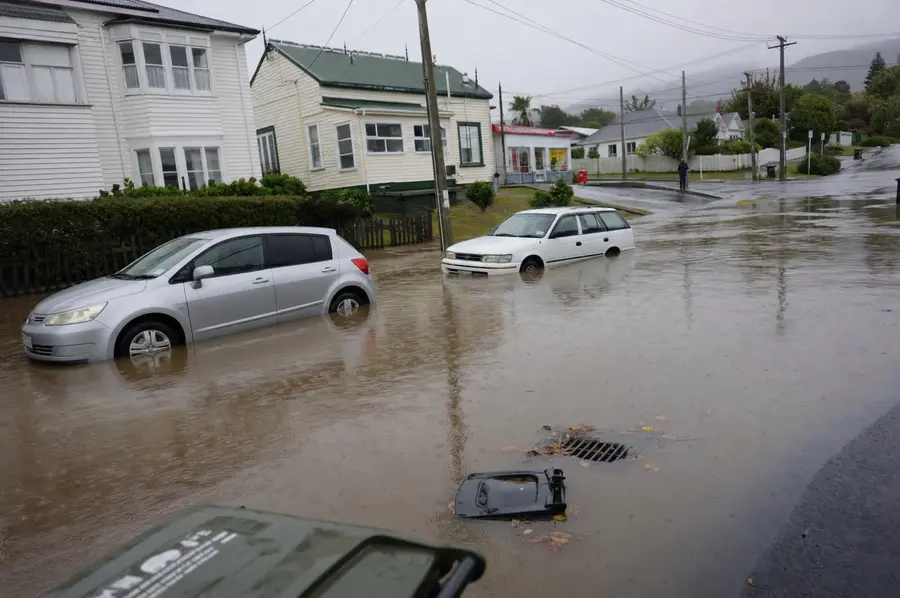
- Your own vehicle
- Repairs to your car after an at-fault crash come out of your pocket. So does the whole car if it is written off. This is the entire difference between the levels.
- Fire and theft
- Not on the bottom level. If a stolen car or a burnt-out car is the loss that would actually hurt, the middle level exists for exactly that and is worth pricing before you settle on third party only.
- Storm, flood and hail
- Weather damage to your own car is not covered on third party, and the middle tier does not add it back either. A flooded street in Auckland or a hailstorm in Canterbury is a comprehensive-only claim, which matters more each year the weather gets rougher.
- Your excess
- An excess still applies when you claim, even though the payment goes to somebody else. Third party is not an excess-free product, and some policies apply extra excesses for younger or newer drivers.
- Unlicensed or non-compliant driving
- Driving without a valid licence, or outside the conditions on a restricted or learner licence, sits outside the cover. So does driving under the influence of alcohol or drugs.
- Use the policy was not rated for
- Carrying or towing goods for hire or reward is commonly excluded on a personal policy. If the car earns money, the insurer needs to know before the claim, not after it.
- Racing and off-roading
- Track days, motorsport events and deliberate off-road driving are standard exclusions across the market, on every cover level rather than just this one.
- Wear, tear and mechanical failure
- Insurance responds to sudden accidental events, not to a clutch reaching the end of its life. No cover level changes that.
Quick heads up: this is general info to help you get your head around the cover levels, not advice about your exact situation. What is actually covered comes down to your policy wording, so give it a read or flick us a message and we will talk it through.
What is third party fire and theft?
Third party fire and theft is the middle cover level. It covers the same damage you cause to other people, and adds your own car back in for two specific losses: theft, and fire. Accident damage to your vehicle stays excluded.
The payout on your own car is normally market value at the time of the loss, or the sum insured shown in your schedule, whichever is lower, with the excess coming off. Damage from an attempted theft, a smashed quarter light and a punched ignition barrel, is usually covered too, though that is a detail worth confirming on the wording rather than assuming.
What makes this level interesting is which risks it keeps. Theft and fire take the whole car at once and give you no chance to react. An at-fault crash is the one loss on the list you have some influence over. The middle tier keeps the first two and drops the third, which is a reasonable trade for a car that is old enough to be a target but not valuable enough to justify insuring every dent.
The Crossover Point
Third party or comprehensive, which is better for you?
Neither is better in general terms. The most that comprehensive cover can ever pay for your own car is what the car was worth, less the excess. Once that number gets small, the extra cover is protecting very little.
Split the decision in two, because the two halves behave completely differently.
The first half is what you might owe someone else. That half does not change when you drop cover levels. The $20 million property damage limit is there on third party, on fire and theft, and on comprehensive alike. The bill you genuinely cannot absorb, a written-off ute in a Christchurch intersection or a shopfront you took out on a wet morning, is covered the same way at every level. This is the half people assume they are giving up, and they are not.
The second half is your own car, and it has a hard ceiling. It cannot pay more than the vehicle was worth, and the excess comes off that. So the entire extra benefit you are buying when you step up to comprehensive is one number: market value minus excess, paid once, and only when the damage is your fault and the car cannot be economically repaired.
The most that comprehensive cover can ever hand back for your own car is what the car was worth, minus your excess. The other person's bumper is covered either way.
| Car's market value | Excess | Most it can pay back |
|---|---|---|
| $3,000 | $1,000 | $2,000 |
| $8,000 | $1,000 | $7,000 |
| $25,000 | $1,000 | $24,000 |
At the bottom of that table the arithmetic gets uncomfortable. A car worth $3,000 with a $1,000 excess means comprehensive is defending $2,000, in a single event, in the one type of crash where you were at fault. That is the crossover point. Somewhere between the top row and the bottom row, the value of the thing being protected falls below what it is worth paying to protect it, and the sensible move is to keep the liability cover, keep fire and theft if the car is a target, and carry the rest yourself.
Two things move that point. A larger excess pulls it up, because it shrinks the pool further. Agreed value pushes it down, because a fixed payout figure is worth more than an argument about what a fifteen-year-old hatchback was worth on the day. Our page on comprehensive car insurance covers how the two settle differently.
The honest caveat is that this is arithmetic, not a rule. If losing $2,000 without warning would wreck your month, the small pool is still worth insuring. The point of the exercise is knowing what you are buying, so the decision is deliberate rather than a default carried forward from the last renewal.
When does dropping to third party make sense?
When the car is paid off, its value has fallen close to the excess, and replacing it out of pocket would be annoying rather than damaging. Those three together are the signal. Any one of them on its own is not.
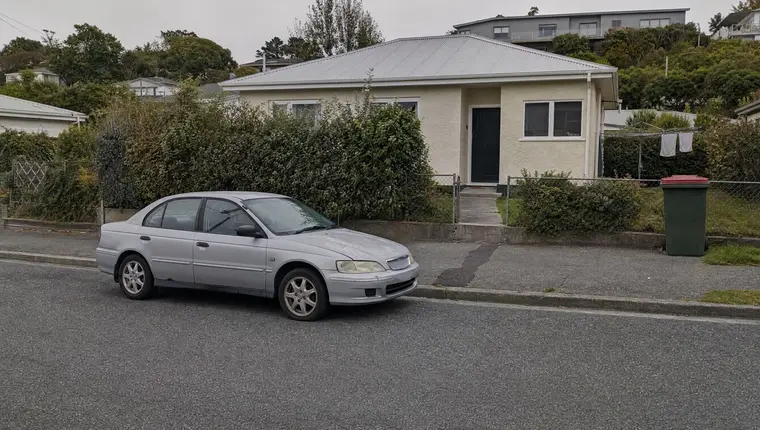
Paid off, worth a few thousand, easy to replace. This is the car the bottom cover level was made for.
Worth a serious look
- The car is fully paid off, with no finance or lease conditions attached to it.
- Its market value has drifted down to where the gap between value and excess is a few thousand dollars at most.
- You could replace it tomorrow without borrowing, even if you would rather not.
- You want the theft and fire half but not the accident half. That is the middle tier, not the bottom one.
- Repairs on it are already uneconomic. Panel work on an old car regularly costs more than the car.
Probably not yet
- There is finance on the car. Lenders usually require comprehensive as a loan condition, and breaching it causes its own problems.
- Losing the car without warning would mean borrowing to get to work.
- You want agreed value, because the car is modified, an import or otherwise hard to price after the fact.
- You do serious kilometres in stop-start Auckland or Wellington traffic, where low-speed at-fault knocks are the common claim.
- The car is newish, or someone on the policy is a new driver. Both keep the gap between value and excess wide.
One question comes up often enough to answer directly: should older drivers downgrade to third party? Age is not the signal. The arithmetic above runs the same at 70 as at 40, and a retiree who has finally bought the newish car they always wanted has more at stake, not less. Downgrade when the car's value says so, not when a birthday does.
Price Shopping
Which insurer is cheapest for third party cover?
There is no single cheapest insurer in New Zealand. The same driver, same car and same address can be cheapest with one insurer and mid-pack with the next, because each one weights age, location, vehicle and claims history differently.
That is why comparing on the same cover level matters more than chasing a name. A third party quote read against a comprehensive quote tells you nothing except that one covers less, and the gap between the two on any given car is the thing you actually want to see. Set the cover level and the excess to the same figures across every quote before you look at a single price. Consumer Protection puts the same point plainly in its guidance for drivers: do not just go on price, look at what each policy covers.
If you want the method rather than the summary, our guide to comparing car insurance works through how to line quotes up so they are genuinely comparable.
When is a broker useful on the cover level decision?
The cover level question is one conversation, not a form field. It depends on what the car is worth now, not what you paid for it.
Most people move down a cover level at renewal, quietly, on a hunch that the car is not worth insuring properly any more. The hunch is often right and the timing is often years late. Kapi Insurance looks at the current value, the excess you are carrying and whether there is finance on the vehicle, then prices the levels against each other with the insurers we work with so the comparison is real.
When we arrange your cover, the insurer pays us a commission. If you ever need to claim, you deal with your insurer directly. Our job is getting the cover level right at the start and revisiting it when the car's value has moved.
FAQ
Common questions about third party cover
If your question is not here, request a callback and we will talk it through.
Get a Free Quote- What is covered under 3rd party insurance?
- Damage your car causes to other people. That means their vehicle, and their property such as a fence, a gate or a shopfront. Most policies cover legal liability for property damage up to $20 million, and the excess in your schedule applies to each claim.
- What is not covered by third-party insurance?
- Your own car. A third party only policy does not pay to repair or replace your vehicle after a crash, a storm, vandalism, a fire or a theft. Personal injury sits with ACC rather than the policy, and the usual driver exclusions apply.
- Which is better, third party or comprehensive?
- Neither is better in the abstract. The most that comprehensive cover can ever pay for your own car is what the car was worth, less the excess. Once that figure gets small, the extra cover is protecting very little, while the liability half stays the same on both.
- What is the difference between third party and third party fire and theft?
- Third party fire and theft is the middle level. It covers the same damage you cause to other people, and adds cover for your own car if it is stolen or destroyed by fire. Accident damage to your own vehicle is still excluded.
- Is car insurance compulsory in New Zealand?
- No. Car insurance is not a legal requirement here, unlike most countries that run a compulsory third party scheme. Nothing stops the driver who hits you from being uninsured, and nothing stops you being liable for their repair bill either.
- Does third party insurance cover storm or flood damage to my car?
- No. Third party only responds to damage your car causes to other people. Storm, flood and hail damage to your own vehicle is not covered at this level. Fire and theft cover adds two specific risks back in, and storm damage needs comprehensive.
- What happens if an uninsured driver hits my car and I only have third party?
- Most third party policies include a limited benefit for exactly this, set between $4,000 and $5,000 on the wordings we checked in August 2026. You need the driver's name, contact details and registration, the driver has to be at fault, and some insurers still deduct an excess.
- Does third party cover a hit-and-run?
- No. The uninsured driver benefit only applies when you can identify the driver, so an unidentified hit-and-run leaves a third party policyholder paying for their own repairs. Comprehensive covers the damage, though the excess normally stays because no at-fault driver can be identified.
- Someone hit my parked car. Will their insurer repair it or pay me out?
- If the driver is insured and their insurer accepts fault, that insurer pays to repair your car, or pays its market value if repairs are uneconomic. That applies whatever cover you hold. Get the driver's name, registration and insurer at the scene, and photograph everything.
- Should older drivers drop to third party?
- Age alone is not a reason. The decision runs on the same arithmetic at 70 as at 40: what the car is worth, the excess, and whether replacing the vehicle out of pocket is realistic. A retiree driving a newish car still has plenty at stake.
Not sure which level your car warrants
Tell us what you drive, roughly what it is worth now and whether there is finance on it. We will price the cover levels against each other and explain what you gain and give up at each one. No obligation.