Younger drivers
Car insurance for young drivers
The age excess, the licence conditions, and the shortcut that can cost you the claim.
A driver in their teens or early twenties is the most expensive risk on any motor book, and every insurer prices it that way. What varies between insurers is how much of that cost sits in the premium, how much sits in the excess, and how much of it a household can move without misleading anyone.
This page covers car insurance for young drivers in New Zealand: what an age excess actually does, what a learner or restricted licence changes, and the main driver question that quietly decides whether a claim gets paid. If you want the cover itself rather than the background, start with arranging cover for the family car.
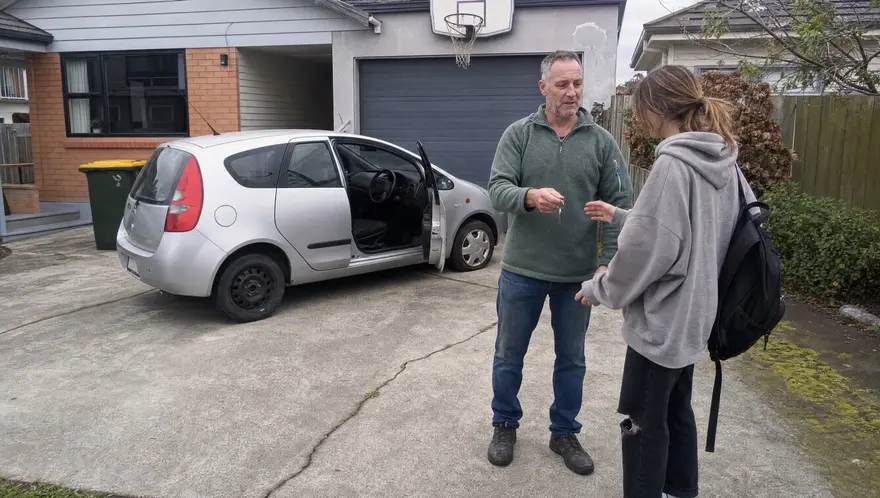
Why is car insurance so expensive for young drivers?
Age and driving experience are two of the strongest signals an insurer has, and a young driver has an unhelpful reading on both. There is also no claims history to argue with, so the price is set almost entirely on the profile.
Insurers rate age and experience as separate things, which surprises people. A 19-year-old on a restricted licence carries a loading for both. Someone who arrives in Auckland at 32 and passes their full licence a month later carries a loading for experience alone, and on some wordings that shows up as a specific inexperienced driver excess rather than a higher premium.
The vehicle does more work here than most families expect. Repair cost, parts availability, engine size and the car's safety record all feed the rating, and the gap between two cars a teenager might realistically buy can be wider than the gap between two insurers. A tidy small hatchback and a quick European import are not close to each other on any insurer's table.
Address and overnight parking matter too. A car locked in a garage in Hamilton and a car parked on a street in central Wellington are two different risks, and theft and vandalism exposure is a real part of the calculation rather than a rounding error.
How Excesses Stack
What is a young driver excess?
An extra excess that applies when a driver under a set age was behind the wheel at the time of a claim. It sits on top of the standard excess rather than replacing it, and the threshold is usually 25 but is 21 on some policies.
The part that catches people out is that excesses stack. New Zealand motor wordings carry several, and more than one can apply to the same accident.
| Type of excess | When it applies |
|---|---|
| Standard excess | Every accepted claim, whoever was driving. This is the figure quoted on the schedule and the one people think of as the excess. |
| Age or young driver excess | When the person driving at the time of the claim is under the insurer's age threshold. Amounts range from a few hundred dollars to well over a thousand depending on the insurer and the vehicle. |
| Inexperienced driver excess | On several wordings this applies to drivers aged 25 and over who have held a licence for less than two years, in New Zealand or overseas. Age and experience are treated as separate risks. |
| Unlisted or unnamed driver excess | On a policy that names its drivers, when somebody not on the schedule was driving. Some wordings apply this even when the driver had permission to take the car. |
Adding a young driver to the family car?
Tell us who drives what and we will price it properly across the insurers we work with, including the excess you would actually carry.
The Main Driver Question
Can you insure a car your child actually drives?
Yes, and you can own it and pay for it too. What matters is that the insurer is told who drives it most. Putting yourself down as the main driver of a car your teenager actually uses is called fronting, and it is the most common way a New Zealand family loses a claim.
What fronting actually is
A parent takes the policy in their own name and answers the main driver question with their own details. The car sits outside a flat in Dunedin, the 20-year-old drives it every day, and the policy is priced against a 50-year-old with twenty-five clean years behind them. The premium drops sharply, because the insurer is rating a risk that is not the one on the road.
It is not the same thing as owning your child's car, paying for their cover, or being the one who deals with the insurer. All of that is normal and none of it is a problem. The problem is one specific field on the form.
Why people do it
Usually not out of any intention to defraud anybody. Sometimes the parent genuinely owns the car and it feels natural to be the name on the policy. Sometimes the quote in the young driver's own name comes back at a number the household cannot absorb, and this looks like the only way to get them insured at all rather than uninsured.
The quote form does not help. It asks the question once, accepts whatever is typed, takes the payment and issues a policy. Nothing pushes back. The first time anyone tests the answer is after a crash, which is the worst possible moment to find out the answer was wrong.
What happens at claim time
On a large claim, the insurer looks at who was driving and how the car was actually used. Establishing the real pattern is not difficult. Where the vehicle lives, who was driving in every earlier incident, what the police report says, whose details are on the fuel account. None of that requires an investigator with a long lens.
Consumer Protection states the position plainly in its guidance for drivers: if you are down as the main driver but your child mostly drives the car, you may not be covered if they have an accident. Their car insurance page is worth two minutes before you fill in any quote form.
The legal frame is tightening rather than loosening. The Contracts of Insurance Act 2024 will require a consumer to take reasonable care not to make a misrepresentation to the insurer before a policy is entered into or varied. It is not in force yet. It commences on a date set by Order in Council, and any part not already commenced takes effect on the third anniversary of Royal assent, which falls on 15 November 2027. When it does, it sets out how insurers respond in proportion: where a higher premium would have been charged, the payout can be reduced by reference to the premium actually paid, and where the misrepresentation was deliberate or reckless the policy can be treated as though it never existed.
The bill that follows is rarely the family car. It is the other party. A young driver who writes off somebody else's late-model vehicle and takes out a fence on the way through is looking at tens of thousands of dollars with no policy standing behind them, and that liability lands on whoever was driving.
The main driver is whoever uses the car most. Not whoever owns it, not whoever pays for it, and not whoever the quote comes back cheapest under.
Can I insure my son if he doesn't live with me?
Yes. A policy can be arranged whether he lives with you in Christchurch or three cities away. Two questions decide how it is priced, and neither of them is about who pays. The insurer wants to know where the car is kept overnight, and who drives it most.
If the car lives at his flat and he drives it daily, the honest answers are his address and his name. You can still be the registered owner. You can still pay the premium. You can still be a named driver on the policy for the times you borrow it. What you cannot do is put your address and your name into those two fields because the number comes back better that way, and living apart makes that harder to defend rather than easier.
There is no third option that is both cheap and accurate. A policy that names the wrong main driver is cheaper because it is insuring somebody else.
The Honest Levers
How can a young driver bring the premium down?
The car, the excess, the licence stage and the way the drivers are listed. Those four are the honest levers, and between them they move the number further than switching insurers usually does.
-
Choose the car with the insurance in mind
This is the biggest lever available before a policy even exists. Engine size, repair cost, parts supply and theft history all feed the rating. Getting a quote on two or three candidate cars before buying one costs nothing and occasionally changes the decision entirely.
-
Set a voluntary excess at a number you could actually pay
Raising the excess lowers the premium, and on a young driver policy the effect is more pronounced than usual. The limit is what the household could find tomorrow, not what the dropdown offers. Remember the age excess sits on top, so work from the combined figure.
-
Ask about driver training excess reductions
Some insurers cut the young driver excess by a set amount once an approved defensive driving or safe driver course is completed, typically until the driver turns 25. It is not offered by everybody and it is rarely advertised loudly, so it is a question rather than an assumption. The course has one guaranteed payoff regardless: under the licensing rules that run until the system changes on 25 January 2027, an approved course shortens the restricted licence period by three or six months depending on age, which gets the driver to a full licence, and a better risk rating, sooner.
-
Get to a full licence, then tell the insurer
Moving from restricted to full changes the risk rating and removes the licence conditions that expose a claim. It is one of the few improvements that happens on a known date. Nothing updates automatically, so it is worth a call to the insurer the week it happens.
-
List the drivers rather than leaving the policy open
A policy open to any licensed driver has to be priced for the worst case. Naming the household drivers tells the insurer exactly who is behind the wheel and often prices lower. The trade is that anyone not on the list can trigger an unlisted driver excess.
-
Match the cover level to what the car is worth
A first car worth a few thousand dollars is a different decision from a late-model one. The most you can ever recover for your own vehicle is what it was worth, while damage to somebody else's car has no such ceiling. Our guide to comprehensive cover sets out where the line usually falls.
The Vehicle Itself
Which cars cost more to insure for a young driver?
High-theft models and anything quick. The awkward part is that the cheap, reliable first cars families gravitate towards are also the most stolen cars in the country, and theft risk feeds straight into the premium.
AMI's 2025 theft claim data, released in February 2026, puts the Toyota Aqua at the top of the stolen list for the fourth year running, at 8 percent of all stolen vehicle claims, with the Corolla and Nissan Tiida behind it and older Japanese hatchbacks and utes filling the rest of the top ten. Nearly nine in ten stolen vehicles were more than ten years old, and Auckland, Canterbury and Waikato were the worst-hit regions. That list overlaps almost exactly with the first-car shortlist of a typical 18-year-old.
A theft-magnet model is still insurable, and it is not automatically the wrong car. The risk shows up as a higher premium, and sometimes as conditions, so it is worth asking each insurer whether an immobiliser or where the car parks overnight changes the terms. Quote two or three candidate cars before buying, because the theft loading on one model against another can outweigh everything else on the form.
At the other end of the price question sit the obvious suspects: large engines, quick European imports, anything modified, and anything expensive to repair. A tidy, unremarkable small car that is not on the stolen list is the sweet spot, which is exactly as boring as it sounds.
Does a learner or restricted licence change the cover?
The licence stage rarely changes what the policy covers. Breaching a condition of that licence does. Most motor wordings exclude cover where the driver was not complying with their licence conditions at the time of the accident.
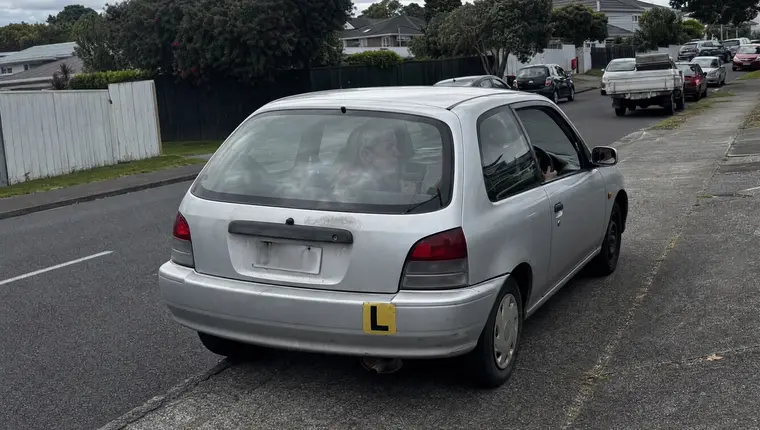
The licence conditions are set by the NZ Transport Agency. Breaching them is what exposes the claim.
The conditions themselves are set by the NZ Transport Agency, not the insurer. A learner licence holder must have a supervisor in the front passenger seat who has held a full licence for at least two years. A restricted licence holder cannot drive between 10pm and 5am, and cannot carry passengers other than a spouse or partner, or a financially dependent child who normally lives with them, unless a qualified supervisor is in the front passenger seat.
Which means a restricted driver running three mates home at 11pm is outside two conditions at once. If they hit something on the way, the claim is exposed before anyone has even looked at who was at fault. That is the same regardless of which insurer wrote the policy, because the exclusion is close to universal in New Zealand.
The Insurance and Financial Services Ombudsman scheme has upheld exactly these declines. In one published case a restricted driver crashed while carrying a passenger who did not hold a full licence, the insurer declined, and the IFSO scheme agreed, because a suitably qualified supervisor could have helped prevent the accident. The scheme's guidance makes the practical point plainly: where the missing supervisor even contributed to the crash, that is enough to decline, and proving a supervisor would not have helped is very hard.
Tell the insurer the licence stage when the cover is arranged, and tell them again when it changes. Most policies also want every regular driver under 25 named on the schedule rather than relying on the general permission wording.
Price Shopping
Who has the cheapest insurance for a young driver?
There is no single cheapest insurer in New Zealand. The same driver, same car and same address can be the cheapest with one insurer and mid-pack with another, because each one weights age, driving experience, location and vehicle differently. That is why comparing on the same cover level matters more than chasing a name.
The spread between insurers is wider for young drivers than for anyone else, which cuts both ways. It means the first quote is a poor guide to the market. It also means a name somebody recommended to you, based on their own policy at 45 with a garaged wagon, tells you very little about what they will do with a 19-year-old in a hatchback. We set out how to line quotes up properly in our guide to comparing car insurance.
One more thing worth knowing before you start collecting quotes: the excess structure moves the real cost as much as the premium does, and a quote that looks better because it carries a larger age excess has not saved anyone anything. It has moved the cost to the day of the accident.
Putting It Together
What is the cheapest way to insure a 17 year old?
A combination rather than a single trick. The right car, the young driver listed accurately, a voluntary excess set at the top of what the household could genuinely pay, and any excess reduction the insurer offers for approved driver training.
Adding a 17-year-old as a named driver on a family car they are not the main driver of usually prices lower than a standalone policy in their own name.
That only works while it is true. The moment the car becomes theirs in practice, the main driver answer has to change with it.
The age excess still applies when they are driving, on a family policy just as much as on their own.
Every year without a claim improves the picture, so the first policy is the expensive one rather than the permanent one.
None of that involves describing the household differently from how it actually works, which is the point. The version that survives a claim is the version that matches the driveway.
Where does a broker fit in for young drivers?
An insurer cannot tell you that another insurer treats young drivers more kindly, and it has no reason to talk you out of a main driver answer that makes the sale easier. Kapi Insurance can do both, because our job finishes when the cover is right rather than when the policy is sold.
In practice that means asking who actually drives what before anything is quoted, checking the combined excess rather than the headline one, and putting the licence stage in front of the insurer instead of leaving it in a checkbox. When we arrange your cover, the insurer pays us a commission. If you ever need to claim, you deal with your insurer directly.
Quick heads up: this is general information to help you get your head around how young driver cover works, not advice about your situation. What is actually covered comes down to your policy wording, so give it a read or flick us a message and we will talk it through.
FAQ
Common questions about insuring a young driver
If your question is not here, request a callback and we will talk it through.
Get a Free Quote- Who has the cheapest insurance for a young driver?
- There is no single cheapest insurer in New Zealand. The same driver, same car and same address can be priced competitively by one insurer and poorly by the next, because each one weights age, driving experience, location and vehicle differently.
- What is the cheapest way to insure my 17 year old son?
- The levers that genuinely move the number are the car he drives, the excess you agree to carry, whether he is listed correctly on the policy, and any excess reduction the insurer offers for an approved driver training course.
- Can I insure my son if he doesn't live with me?
- Yes. A policy can be arranged whether or not he lives with you. The insurer will ask where the car is kept overnight and who drives it most, and both answers have to describe his situation rather than yours.
- What is a young driver excess?
- An extra excess that applies when a driver under a set age, usually 25, was driving at the time of a claim. It sits on top of the standard excess rather than replacing it, and the amount varies a lot between insurers.
- Does a learner or restricted licence affect car insurance?
- The licence stage rarely changes what the policy covers. Breaching a condition of that licence does. Most motor policies exclude cover for a driver who was not complying with their licence conditions when the accident happened.
- Why is the young driver excess added on top of the standard excess?
- Because the two price different things. The standard excess is your share of any claim on the policy. The age excess prices the extra risk of who was driving at the time, so it only appears when the young driver was behind the wheel, stacked on the standard figure.
- Can I put myself down as main driver to make my child's insurance cheaper?
- Not if they actually drive the car most. That is fronting, a misrepresentation that can leave the claim unpaid after a crash. Owning the car, paying the premium and being a named driver are all fine. The main driver field has to name whoever genuinely uses the car most.
- Will a claim be declined if a learner was driving without a supervisor?
- It can be. Most motor policies exclude driving outside licence conditions, and the Insurance and Financial Services Ombudsman scheme has upheld declines where the breach contributed to the accident. In practice it is hard to prove a qualified supervisor would not have helped avoid the crash.
- Which cars are the most expensive to insure for a young driver?
- High-theft models and anything quick. AMI's 2025 theft claim data puts the Toyota Aqua at the top for the fourth year running, with older Japanese hatchbacks filling the list, and theft risk feeds straight into pricing. Large engines, imports and modified cars carry their own loadings.
Get the young driver on the policy properly
Tell us who drives the car, where it sleeps and what licence they hold. We will price it accurately across the insurers we work with and show you the excess you would really be carrying. No obligation.